Written by Olivia Stirling (Research Assistant).
My name is Libby Stirling, and I have been a Research Assistant on the ReSET Project since June 2023. ReSET is one of many projects which makes up the Developmental Risk and Resilience Unit (DRRU) lab at UCL – you can learn more about the rest of the DRRU here. A great deal of my work on ReSET has been around social networks….
Social networks – what are they & why is ReSET interested in them?
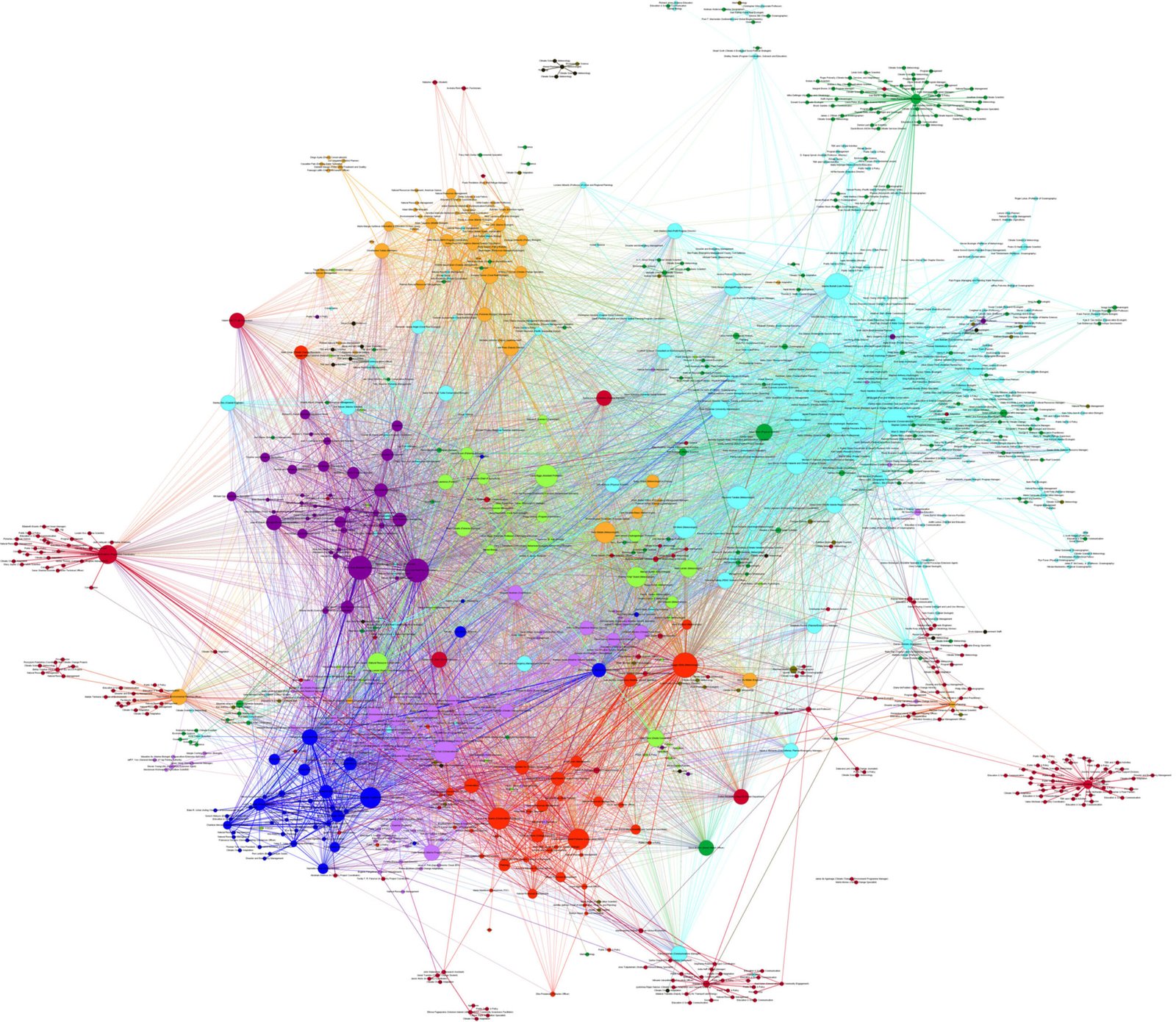
Social networks map the relationships between individuals by asking them questions and seeing who they nominate for each one.
We know that good social relationships can have a positive effect on our mental wellbeing at any age. Research has shown that during adolescence, peer relationships can significantly influence teens’ behaviour and emotions. ReSET is studying the link between social relationships and mental wellbeing, as well as the potential overlap with emotion processing, to more deeply understand the potential impact on adolescents’ mental wellbeing and what we can do to support positive social relationships.
Ritika Chokhani is a PhD student in the UCL-Wellcome programme for Mental Health Science, which she is completing within the DRRU lab. Given the relevance of Ritika’s research to what we’re working on within the ReSET project, I sat down with Ritika to learn more about her work.
Understanding the Link Between Trauma and Social Relationships
What happens to our relationships when childhood trauma is experienced? That’s the question Ritika is exploring in her PhD, which looks at how interpersonal childhood trauma – like neglect, abuse or bullying – might shape the way people connect with others later in life.
She explains that these differences might include lower trust or reduced sense of agency in relationships – which could then affect how supported or connected someone feels. This concept of “social thinning” is central to her work: the idea that trauma may lead to sparser social networks of trusted individuals and greater loneliness, even if someone appears socially active.
Why This Work Matters
Having worked beside Ritika for over a year now, I wasn’t too surprised to learn that what drew her to this topic wasn’t too dissimilar to my own motivations for working in youth mental health research. Prior to her PhD, Ritika worked as a clinician, where she saw first-hand the impact childhood trauma had on people’s later relationships.

Ritika explained that her clinical work was with both young people and adults – seeing people still going through traumatic experiences, whilst others are still processing them years later. Her reflections reminded me how the effects of trauma ripple through time.
Staying Motivated in Research
Anyone who’s worked in mental health support knows it can be emotionally heavy. And research, especially when it’s slow-moving or complex, can sometimes feel like shouting into the void. I asked Ritika what keeps her going.
“In a PhD, you have to make an original contribution to knowledge. So it’s actually really exciting to find out something that nobody’s found out before. And that curiosity that I want to find this out is what keeps me going.”
I personally found Ritika’s take on this refreshing – a reminder that personal investment and curiosity are powerful motivators. For me, it’s the hope that our work might help young people feel more connected, more understood, and more supported.
Early Findings: Quantity vs Quality of Friendships
Ritika’s research is still ongoing, but she shared how a finding from one of her recent studies surprised her. That children who had experienced adversity spent more time with friends but felt less supported by and happy with those friends.
This difference between quantity and quality of friendships – being supported, rather than just surrounded, by friends – is important to explore, but how does someone even go about measuring and exploring these mechanisms?
Methodological Challenges
Ritika’s PhD uses both epidemiological and experimental methods – a challenging but rewarding interdisciplinary approach. She told me more about the challenges that come with trying to use and combine the insights from both these methods.
Epidemiological methods often use existing large datasets that have followed up, for example, people who have experienced trauma and those who haven’t from their childhood till adulthood. She explained that while the advantage of using existing longitudinal datasets that it’s really rich data which has already been collected, one limitation is that they don’t always include the measures she’d like – for example, measures of . And while self-report data is valuable, it’s not always enough.
This tension between what we can measure and what we want to understand is something I’ve felt in my own work too. I explained to Ritika how in a previous job as an Assistant Psychologist, I saw just how much discrepancy in measures’ scores there could be when completed by the young person themselves, as opposed to by a caregiver, or by a teacher. Ritika acknowledged my frustrations with these measures, “Exactly that’s one of the critiques, right? If you get parent reports and teacher reports, it’s all different!”, particularly when you are not there to observe the behaviours yourself.
Real-World Implications
I asked Ritika how she sees her work contributing to clinical practice or policy – a big question… I apologised for asking such a big question, but she credited her Lived Experience Advisors for pushing her to think about this more deeply recently – “Shout out to them for motivating me to think about this! Because they ask these kinds of questions!”
In terms of potential implications for clinical practice, Ritika explained how she hoped the work could stimulate more discourse, prompting clinicians to think about how they can consider social processes, such as trust, connection and support, in their interventions.
For policy, Ritika said that this work could help make a case for embedding this relational understanding in trauma-informed systems and services. For example, how can a service for care-experienced young people be built to encourage social exploration and counter social thinning?
A Global Perspective
Given that Ritika has worked across clinical and research settings in both India and the UK, I asked how this has shaped her perspective on mental health research.
“So, I do think that has shaped my perspective quite a lot because India obviously, it’s a less developed country. And so, it means there is a lot more poverty and that – And I don’t have immediate empirical support for this- my sense is that if you were to measure the levels of trauma and ACEs [Adverse Childhood Experiences] in India, it would be very high.”
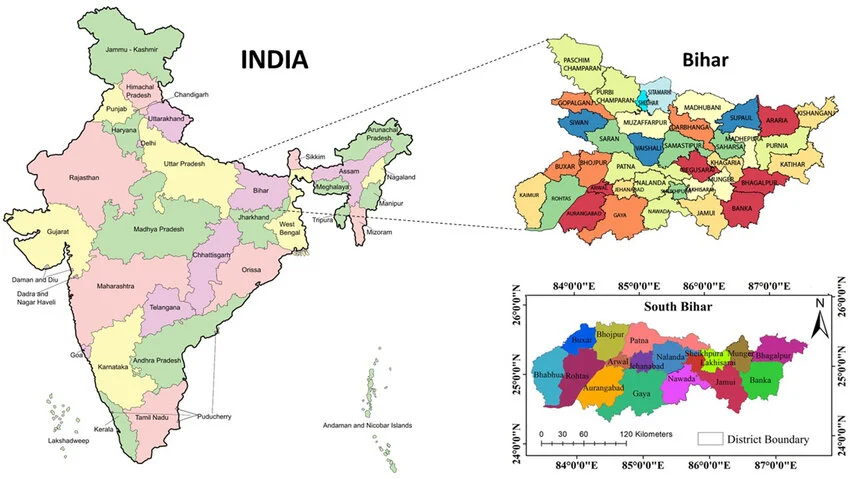
“I really do feel like that we need to do more research in countries like India on these topics, because if we are to be a truly global field, we need to consider the fact that 80% of the world’s population who has mental health problems lives in low and middle income countries. So for example, Bihar, a single state in India is estimated to have more people living with schizophrenia than the entirety of North America.”
She spoke about the challenges faced as a clinician in India: “it was very hard for me to help people who were really struggling with the lack of access to basic resources, , how can you tell them that, , “I can support you to improve your mental health” when they don’t have access to food, or clean water on a daily basis? So that was something that I carry with me, that it’s really hard to work on mental health as a silo when the person doesn’t have other things like access to basic resources and healthcare.”

The point Ritika makes, that mental health support cannot be isolated from broader social and economic realities, resonated with me. Mental health research is progressing towards ‘global approaches’ – the idea that an intervention can be conceptualised and validated in one part of the world and be just as useful in a country thousands of miles away! Thinking of other factors that perhaps aren’t necessarily being considered enough in research, I asked Ritika how culture around mental health impacts the work she did. She acknowledges awareness of mental health being key, and how awareness can differ based on other factors such as being in an urban city compared to a rural area. She notes how it is awareness that aids people seeking support, and agreeing to prescribed interventions or medication. **
Creativity and Curiosity
Coming to the realisation that I’d spent more than a good amount of time asking Ritika some very big questions, I thought it would be nice to ask Ritika about her personal interests…
Ritika loves to read, particularly science fiction and fantasy. Not only that, but she wrote some of her own fiction! She reflects on how the creativity and imagination of fiction carries over to her research – to think outside of the box and create new ways to study. It was a lovely reminder that research isn’t just technical – it’s imaginative. It requires us to think differently, to ask new questions, to have these new ways of understanding the world.
Final Thoughts
Talking to Ritika reminded me how much research is shaped by the people behind it – their experiences, their questions, and their drive to make sense of things that don’t yet have answers. Her work is a powerful example of how clinical insight and academic curiosity can come together to explore something deeply complex: how childhood trauma impacts one’s relationship with their social world and thereby their mental health.
**
** Unfortunately, I couldn’t include everything Ritika and I talked about in this short blog post, but I did want to highlight what she shared when I asked her more about the global perspective and what, if any, was in place regarding school curriculum at a government level?
Ritika explained: “I think definitely there are a lot of initiatives that are trying to be done. And because, for example, India is such a large country, so then I think what happens is that it’s not necessarily the central government always doing things, but it’s also the state governments, it’s also charity sector organizations within each state that are trialling new initiatives. So, I know, for example, in Mumbai, there are organizations that are doing like SEL, social emotional learning, in schools and so they collaborate with public schools in Mumbai, which usually don’t have any of this curriculum, but they then incorporate this into the existing curriculum, and they try to raise awareness and help children with these skills, which I think is really nice.”
The organisation that Ritika is referencing here is the Apni Shala Foundation. Learn more about them and the work they do by visiting their website: Apni Shala Foundation – Apni Shala Foundation