
Written by Joshua Wood (Research Assistant).
This blog explores Children’s Mental Health Week, the current challenges of supporting young people’s wellbeing – including insights from a member of school staff – and what ReSET is doing to tackle the problem.
Background on children’s mental health
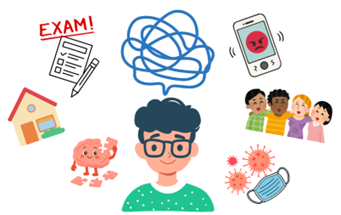
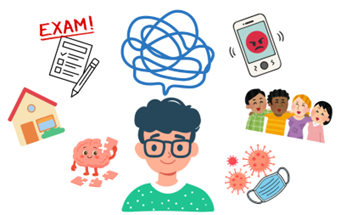
Children’s Mental Health Week was created by the charity Place2Be in 2015 to raise awareness of children and young people’s mental health and provide them with a voice. The theme for 2026 is “This is My Place” which aims to support the systems and structures which encourages a safe, nurturing environment, that makes young people feel a sense of belonging. Children and young people’s mental health is more than ever topical and important to discuss. In England, 1 in 4 young people have a probable mental health disorder – with mental health challenges and disorders increasing in prevalence. The reason for this increase in prevalence is likely nuanced and complex (see the Lancet Psychiatry Commission on Youth Mental Health for a review of potential factors). Some of the factors include the existing pressures of adolescence (friendships, family, school, identity development, and brain development) alongside modern novel challenges (e.g. the COVID-19 pandemic and the rapidly evolving and increased prevalence of digital technology). From attending the Adolescence, Mental Health & the Developing Mind (AMHDM) conference, talks on the digital world, school and university life, and some of the challenges that young people face made it clear that these factors carry weight.
Any of these, or the many factors that have not been mentioned here, could contribute to the high prevalence of mental health challenges in young people. Despite, awareness of mental health being at an all-time high and levels of mental health support increasing, there remains a large need for greater availability of this support. Therefore, early preventative interventions seem promising, particularly within school settings.
“This is My Place” – What does this mean?
A few places come to mind when considering what young people view as “This is My Place” – some non-physical places, such as family and friendship groups, and some physical places, such as home and school. This aligns with a five-factor connectedness model developed by Brown et al. (2025) where students identified social relationships and safe and providing physical places as pivotal for good mental health, alongside good sense of self, a balanced calm mind and successful navigation of one’s emotions. The focus of this blog will be on schools, given ReSET’s development of a school based mental health intervention and that young people spend around 30% of their waking hours at school on a weekly basis. School settings present a convenient and ideal location for which mental health support can occur. Some factors that make schools ideal to deliver support include access to many young people who may not traditionally access external mental health support, the ability to encourage peer networks as support systems so that young people become able to support each other, and that schools present a safe environment for young people that may not have stable home lives. This last point is notable, as schools may be a setting where young people feel it easier to have conversations about mental health if there is mental health stigma at home.
What do school staff think?
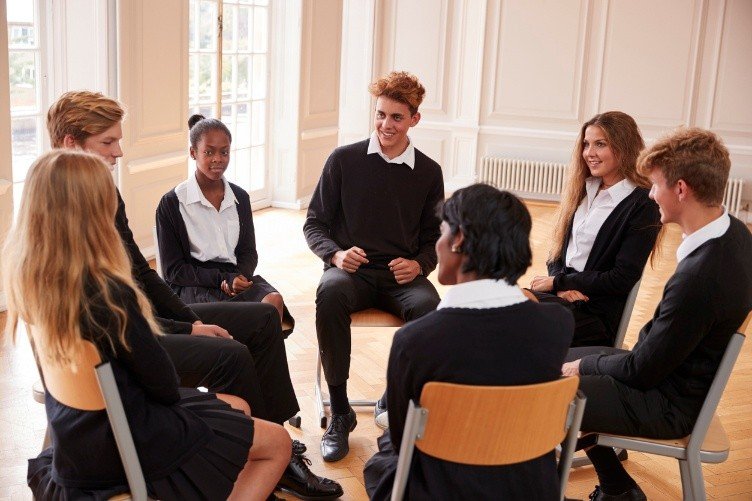
Given how young people may view their school as their “Place” – for Children’s Mental Health Week, I went back to my secondary school to interview a member of staff to discuss mental health within school settings. From the interview one thing stood out to me: school staff want to support young people, but without external support, schools are not equipped to handle the high quantity of mental health need in an evidenced way that can be managed alongside their existing job obligations.
School staff elaborated on this point, explaining that there was not enough mental health support staff at schools, that existing staff are not trained to handle the diverse mental health need, and the everlasting issue surrounding available resources. This is not to say that schools and school staff cannot be a safe space and support system for young people; Sometimes being a friendly face, listening to their challenges and offering a helpful and appropriate alternative perspective is all a young person needs to make them feel school is “their place”. However, when the needs exceed what can be expected from school staff we must consider what can be done to support young people’s mental health.
Thus, the question at hand is what can be done to support children and young people’s mental health within school settings?
What is ReSET?
ReSET hopes to meet the demand for school-based mental support but using a preventative approach that makes the most of school being viewed as the young people’s “Place”. ReSET equips the young people themselves with the skills needed to develop supportive relationships with their peers, manage their emotions during difficult times, to better handle mental health challenges.
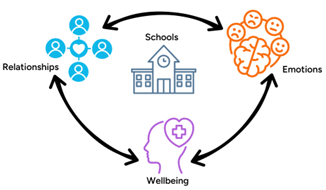
The reasoning behind ReSET is grounded in evidence from research showing the bidirectional links between relationships, emotions and wellbeing – meaning that improvements in one domain likely improve other domains, and when all three are being positively impacted at once then an overall improvement in mental health is likely to occur.
ReSET endeavours to support young people’s mental health, by providing an additional safe “Place” within schools that foster togetherness and the improvement of wellbeing. The goal of the intervention is to equip young people with a set of skills to support social relationships and develop emotion processing abilities. ReSET does this through group sessions of up to 10 young people, supporting social and emotional learning through tablet-based cognitive training, group roleplaying, and teaching various “Me” (within oneself) and “We” (with others) strategies (background of these can be read here). Together, these tools can help young people tackle day-to-day challenges that may negatively impact their wellbeing.
If this piques your interest then please explore our website to learn more about how ReSET supports young people’s mental health: The ReSET Project